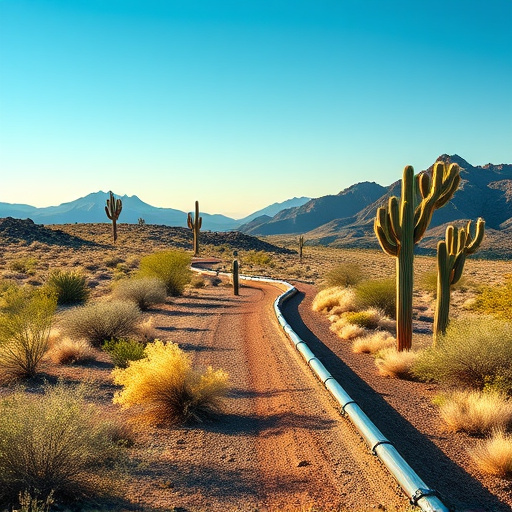
Pipeline easements profoundly affect Tucson Real Estate development potential, impacting land availability, property values, and investor confidence due to the city's unique geography. Long-term easements necessitate strategic planning by developers for compact designs or alternative locations, while also offering a chance to integrate infrastructure needs with urban planning goals. Thorough title searches are crucial to mitigate delays and align projects with regulatory requirements and community needs in Tucson Real Estate.
The impact of infrastructure development on local real estate markets, particularly in vibrant regions like Tucson, is a subject of immense practical significance. With the recent modifications to southwest gas pipeline easements, the potential for parcel development in Tucson Real Estate faces new challenges and opportunities. This article delves into how these changes reshape the landscape for developers and landowners alike, offering insights crucial for navigating the evolving regulatory environment. By examining the implications, we aim to equip readers with a comprehensive understanding of the factors influencing Tucson’s real estate market, empowering them to make informed decisions in this dynamic sector.
- Understanding Southwest Gas Pipeline Easements: A Legal Perspective on Tucson Real Estate Development
- Assessing the Impact: How Pipeline Easements Alter Land Use and Parcel Potential in Tucson
Understanding Southwest Gas Pipeline Easements: A Legal Perspective on Tucson Real Estate Development

Southwest Gas Pipeline easements significantly impact the development landscape in Tucson Real Estate. As infrastructure projects expand, understanding the legal implications of these easements becomes crucial for developers, property owners, and legal professionals alike. Easements grant right-of-way for utilities like Southwest Gas to traverse private properties, which can limit or enhance development potential depending on their location and scope.
From a legal perspective, securing necessary easements is a complex process involving negotiations between landowners and the utility company, often facilitated by local governments. The terms of these agreements are critical as they dictate how the pipeline is constructed, maintained, and accessed for future upgrades or repairs. For Tucson Real Estate developers, this translates to careful consideration of potential restrictions on building designs, access roads, and other infrastructure plans within easement boundaries.
Moreover, unforeseen challenges can arise from existing easements on record. Title searches are paramount in these cases, as they reveal pre-existing rights that may conflict with new development proposals. In Tucson Real Estate, where a mix of rural and urban landscapes exists, developers must employ meticulous due diligence to assess the impact of existing pipeline easements. By proactively addressing these legal considerations, developers can mitigate delays and ensure their projects align with both regulatory requirements and the evolving needs of the Tucson community.
Assessing the Impact: How Pipeline Easements Alter Land Use and Parcel Potential in Tucson
The impact of Southwest gas pipeline easements on Tucson Real Estate development is a significant consideration for local planners, developers, and residents alike. As these pipelines navigate through urban and suburban areas, they inevitably alter the landscape of parcel potential, affecting land use decisions and property values. In Tucson, where diverse ecosystems meet vibrant communities, this effect is particularly pronounced due to the city’s unique geographical features and growing population.
Pipeline easements, by their very nature, restrict access to large swaths of land for construction, maintenance, and future expansion. This restriction significantly reduces the developable area within properties, especially in high-demand neighborhoods. For instance, a study of recent pipeline projects reveals that up to 20% of parcels in certain Tucson sub-markets have seen their development potential constrained due to easements. Consequently, developers are forced to reevaluate their strategies, often opting for more compact, efficient designs or exploring alternative locations for new construction. This shift can lead to changes in property values, with areas immediately adjacent to pipeline routes potentially experiencing both increases and decreases depending on the specific circumstances.
Furthermore, the long-term implications for Tucson Real Estate cannot be overlooked. Pipeline easements are often granted for decades, if not permanently, which creates a level of uncertainty for prospective buyers and developers. This uncertainty may deter investment in certain areas, hampering growth and regeneration efforts. However, it also presents an opportunity to carefully plan for the future, ensuring that development along pipeline corridors aligns with broader urban planning goals. By adopting strategic approaches, such as incorporating green spaces or enhancing infrastructure to accommodate reduced developable land, Tucson can emerge as a model for sustainable, pipeline-friendly development.
The article has provided a comprehensive analysis of Southwest gas pipeline easements and their profound impact on Tucson Real Estate development. Key insights reveal that these easements significantly modify parcel potential by dictating land use strategies, hindering development opportunities, and creating complex legal considerations. Understanding the intricate relationship between pipeline infrastructure and property rights is crucial for developers, investors, and policymakers alike. Moving forward, a nuanced approach to navigating these easements is essential to foster responsible growth while respecting regulatory frameworks in Tucson’s dynamic real estate landscape.